
REVIEW · WHALE & ORCA WATCHING
Húsavík Whale Watching Tour, family owned and operated
Whales in the wild, with no guarantees. That is the whole point, and in Húsavík you get a real shot at seeing everything from humpbacks to rarer visitors like blue or killer whales. This family-run tour runs out of Skjálfandi Bay, with expert commentary and a setup that feels personal rather than mass-market.
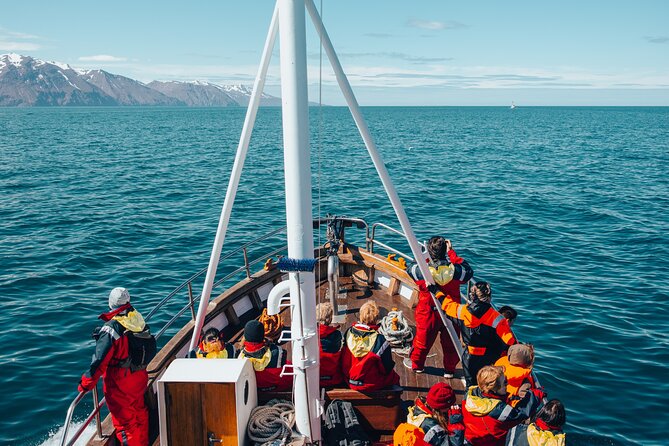
I especially like that you sail on the Moby Dick with life jackets and floatation overalls included, so you spend less time worrying about comfort and more time watching the water. You can also keep an eye out for birds like Atlantic puffins (seasonal), plus sea birds from the coastline route.
One thing to plan for: whale watching is unpredictable, and some days the best you get is brief, distant surface time while cold wind does most of the work. If you hate open water and motion, bring a plan, because this is North Atlantic boat time.
In This Review
- Key highlights to know before you go
- Why Húsavík is such a strong whale-watching bet
- Your 3 hours on Moby Dick, step by step
- Whales, dolphins, and birds you can realistically hope for
- The guide, respectful rules, and why the boat setup matters
- What to wear so you stay warm, not miserable
- Price and value: what $102.84 buys you
- Where this tour shines (and who should book it)
- Quick practical tips to make the most of your outing
- Should you book Friends of Moby Dick whale watching?
- FAQ
- Where does the tour start?
- How long is the Húsavík whale watching tour?
- What does the tour cost?
- What animals might I see on this tour?
- Is this tour private?
- What is included in the price?
- Are drinks and snacks provided?
- What happens if the weather is poor?
Key highlights to know before you go
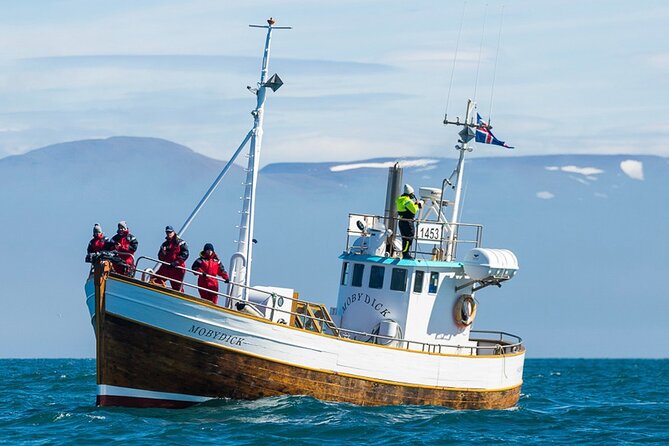
- Skjálfandi Bay timing: you head west toward Kinnarfjöll, then work across the bay where humpbacks are expected
- Expert guide on board (Mada): marine-life explanations plus practical safety and respectful viewing
- Real protective gear: life jackets and protective overalls are provided, not sold as an add-on
- Small-group feel: max 40 travelers, on a boat meant for better viewing and less crowding
- Seasonal bird options: Atlantic puffins are possible between May and mid-August
- Budget-friendly package: all fees and taxes included, plus a 20% discount at the Whale Museum with your boarding pass
Why Húsavík is such a strong whale-watching bet
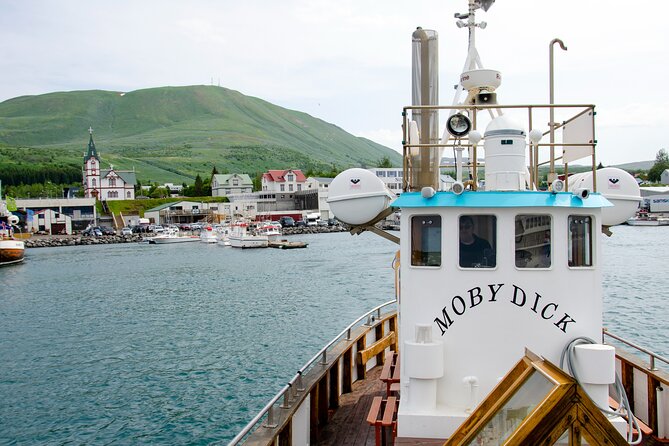
If you are chasing whales in Iceland, Húsavík is one of the places that keeps earning attention, and for good reason. The waters around Skjálfandi Bay and the coastline nearby are where you might see common species such as humpback and minke whales, plus the occasional rare visitor. That mix is what makes this kind of tour fun, because you are not just ticking off a species list. You are learning a living system, where whales, birds, and the ocean’s rhythms overlap.
The best part is that this tour does not pretend every trip will be a movie scene. You are going out to find wildlife, then adjust based on what the sea gives you that day. You might see a few quick surfacings, or you might get longer, more intense encounters. Either way, you are out on the water with people who know where to look and what you are actually seeing.
Your 3 hours on Moby Dick, step by step
The total time is about 3 hours, and it plays out like a focused wildlife search rather than a long sightseeing cruise.
First, you meet at Friends of Moby Dick, Hafnarstétt 35 in Húsavík. Then you head out aboard Moby Dick, which is built for comfortable wildlife viewing. The initial cruising is where the crew works out sightings and positioning.
The route typically takes you west toward the Kinnarfjöll mountain range. Along that line of travel, you can expect the scenery to change from harbor and coast to broader views toward big uplands. The tour info specifically notes Syðri Háganga at 1,284 meters as the highest point in that area, which helps explain why you get wide-open vantage views as you move through the bay.
After that, you work across Skjálfandi Bay. This is the zone where humpbacks are expected, with minke whales sometimes showing up as well. And when other species are around, you might get a surprise. The remaining time is spent staying with whale activity when it appears, then heading back to Húsavík after about 2.5 to 3 hours on the water.
A practical way to think about it: the cruise is short enough that you stay fresh and engaged, but long enough that you are not turning around after one brief look. It is the sweet spot for most people, especially families.
More Whale Watching in North Iceland
- Akureyri: 3-Hour Classic Whale Watching Tour by Ship★ 4.6 · 3,000 reviews
- Whale Watching from Downtown Akureyri★ 4.5 · 971 reviews
- Big Whales & Puffins RIB boat tour from Húsavík★ 5.0 · 501 reviews
Whales, dolphins, and birds you can realistically hope for
Here is what you can plan around, based on what the tour commonly targets and what is possible in these waters.
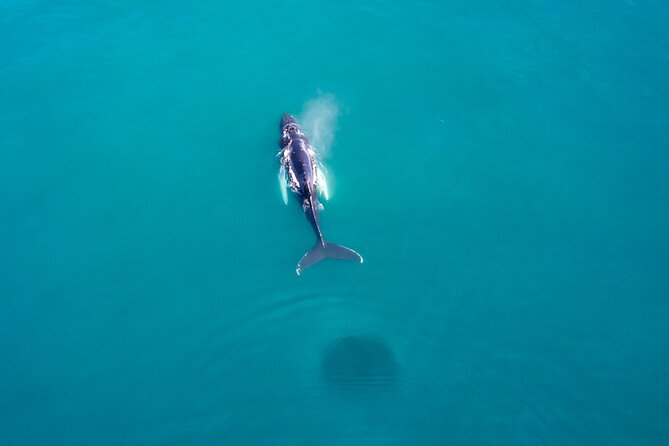
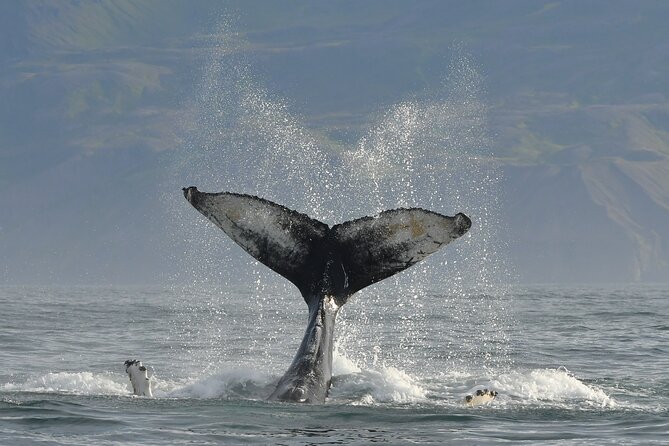
Humpback whales are the main hope across Skjálfandi Bay, and minke whales are also mentioned as a possible sighting. When conditions line up, you might also encounter blue, fin, or killer whales, although those are described as rarer visitors. That matters because it sets expectations: you are not guaranteed the rare stuff, but you are in a region where it can happen.
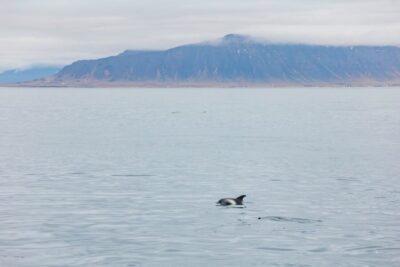
You can also keep an eye on white-beaked dolphins, which are noted as possible on some tours. Dolphin sightings often make people feel like they are getting action even when the whales are far away, so it is a nice bonus.
And then there are the birds. Atlantic puffins are specifically possible between May and mid-August, so if you are traveling in that window, you have a good chance of seeing birds feeding and riding the air currents near the coast. Even without puffins, sea birds are part of the overall package, and watching them can help you enjoy the time between whale sightings.
One key mindset shift I recommend: think of whales as a behavior on your schedule, not a fixed appointment. You are going for the experience of spotting, tracking, and learning how wildlife moves. The days that feel slow can still turn into memorable ones when you notice what the crew is doing and where the wildlife is positioning.
The guide, respectful rules, and why the boat setup matters
This tour is family owned and operated, and you feel that in the way it runs. The staff approach is calm, organized, and built around safety plus wildlife respect.
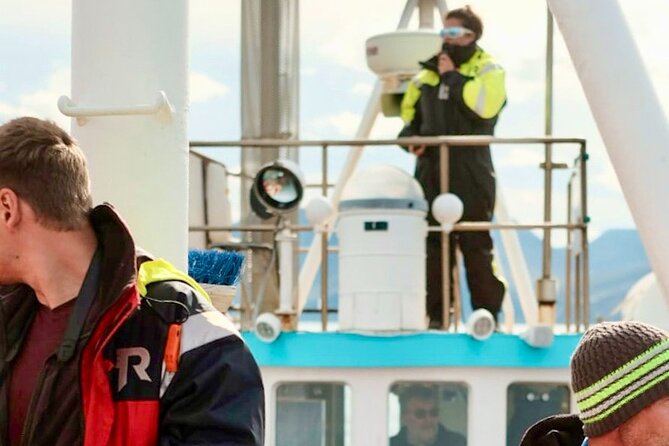
The standout name on board is Mada, a marine biologist and the head guide. Her role is not just to narrate, it is to help you connect the dots. You get explanations about whales, their ecology, and habitat, plus other marine species you may see. If you have ever watched a whale for ten seconds and wished you understood what you were looking at, this is exactly where that gap gets filled.
You also want a crew that respects whales. The tour experience you will likely appreciate is the one where the captain and crew keep watching without encroaching or turning the whole thing into a loud circus. That matters for two reasons. First, it protects wildlife. Second, it usually improves your viewing because the animals are less likely to shut down movement when they feel pressured.
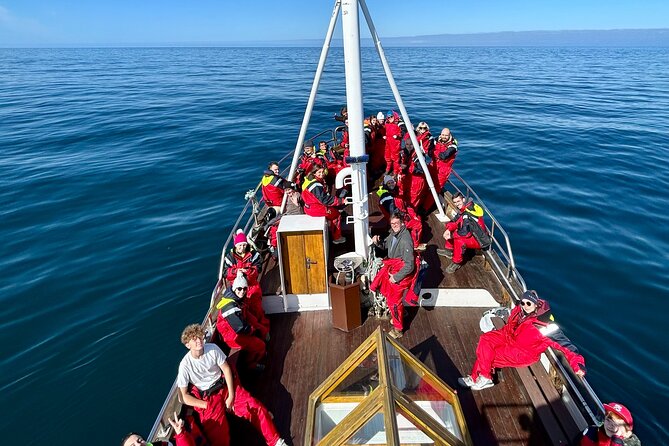
Now, the boat and gear piece. You do not just get to show up and hope for the best. Floatation overalls and life jackets are included, which is a big deal in Iceland’s wintery conditions. It cuts down on the stress of layering too little, especially if you do not travel with heavy cold-weather gear.
One more honest note: a few reviews point out that it can get rocky out there. If you are even slightly prone to motion sickness, this is not the day to tough it out. Bring what works for you, and consider tablets in advance, the way people often recommend for rougher water.
What to wear so you stay warm, not miserable
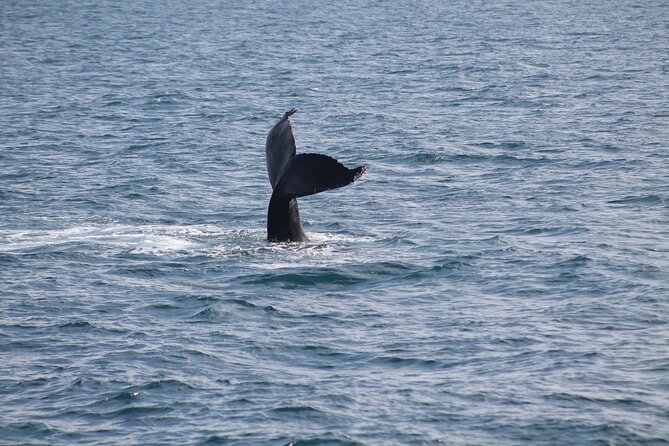
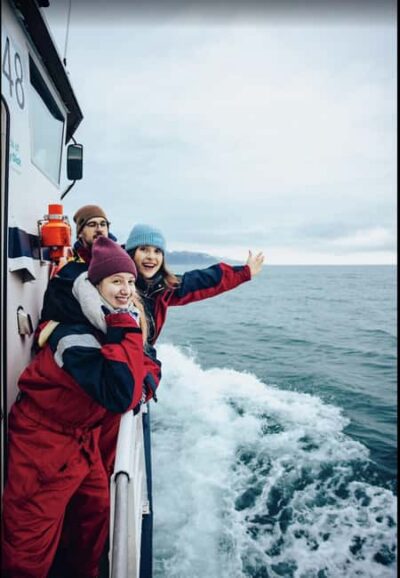
Even with protective gear provided, you will still feel the cold wind. Iceland boats do not do the gentle thing.
Here is what I suggest you do:
- Dress in heavy layers so you stay warm if you get chilled while waiting for sightings.
- Wear warm gloves and a hat if you have them, because hands and ears get hit fast in salt wind.
- If you have waterproof outer layers, bring them. It helps keep comfort up if spray or mist hits.
- If you get motion sickness, plan ahead. Motion and cold together is where discomfort starts.
You will likely spend a good chunk of the time bundled up watching the sea. The better dressed you are, the more you can focus on spotting blows, tracking movement, and enjoying the birds and coastline in between.
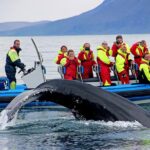
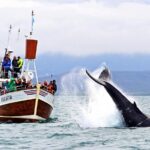
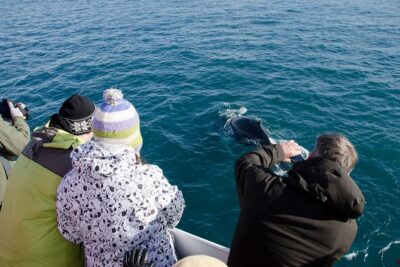
More blows spotted from the rail:
Price and value: what $102.84 buys you
At $102.84 per person for about 3 hours, this is not the cheapest thing on the Iceland menu. But it also is not “tour for the price of a small car,” either. The value comes from what is included.
You get:
- All fees and taxes
- Life jackets and floatation overalls
- Expert guidance in English
- A 20% discount at the Whale Museum if you show your boarding pass
You do not get drinks and snacks, so plan to budget for that separately. That is normal for boat tours, but you should still think it through. If you get cold, warm-up snacks help, and water matters even when you do not feel thirsty.
The biggest value factor, though, is that this is a small-group experience with a guide who knows how to interpret what you are seeing. When you understand whale behavior even a little, the “brief surfacing” days feel less frustrating. You start recognizing patterns, like where blows are likely to appear next and what movement suggests a feeding or transit moment.
Also, the tour is often booked around 46 days in advance on average. If your travel dates are fixed, booking earlier helps you get the time slot you want.
Where this tour shines (and who should book it)
This is a great fit for:
- Families who want a guided wildlife adventure without complicated planning
- First-time whale watchers who would like help learning what to look for
- People who care about respectful wildlife watching and clear safety routines
- Travelers who want a comfortable setup, not a “bring your own gear and hope” situation
You may want to think twice if:
- You need guaranteed close-up whale time. Nobody can promise that.
- You strongly dislike motion on boats or get seasick easily, especially in rougher weather.
- You are only interested in hours-long whale viewing with no cold wind waiting time.
The good news is that even when whale encounters are brief, you are still getting the full package: Skjálfandi Bay’s wildlife context, bird spotting, and expert interpretation.
Quick practical tips to make the most of your outing
Based on how this tour is described and what people emphasize, here are the things that consistently improve the day:
- Go in with a flexible mindset. The sea sets the schedule.
- Dress for cold wind, not just for standing on shore.
- If you are motion sensitive, prepare early rather than waiting until you feel bad.
- Pay attention to the guide’s cues. When the captain and guide shift direction, it is usually because something is happening out there.
- If you also plan to visit the Whale Museum, bring your boarding pass for the 20% discount.
Should you book Friends of Moby Dick whale watching?
I would book it if you want a well-run, family-operated whale-watching outing from Húsavík that prioritizes comfort, safety, and respectful wildlife viewing. The included life jackets and floatation overalls remove a lot of uncertainty, and having Mada on board as a marine biologist guide gives you real meaning behind the sightings.
I would not book it if your personal definition of success is guaranteed close whales for long stretches. This tour is about being out in the right waters with experts, then enjoying what shows up. When whales are active and close, it is spectacular. When they are farther away, the learning and the wildlife mix still make the day worth it for most people.
If you tell me your travel month and whether you tend to get motion sick, I can help you decide what kind of experience to expect and what to pack.
FAQ
Where does the tour start?
The tour starts at Friends of Moby Dick, Hafnarstétt 35, 640 Húsavík, Iceland, and it ends back at the same meeting point.
How long is the Húsavík whale watching tour?
The duration is about 3 hours.
What does the tour cost?
The price is $102.84 per person.
What animals might I see on this tour?
You can hope to see humpback and minke whales. The tour also mentions the chance of rarer whales such as blue, fin, and killer whales, plus white-beaked dolphins on some tours. Atlantic puffins and other sea birds are also possible, with puffins noted between May and mid-August.
Is this tour private?
It is described as private for your group only, with a maximum of 40 travelers.
What is included in the price?
Included items are all fees and taxes, floatation overalls, life jackets, and a 20% discount at the Whale Museum when you show your boarding pass.
Are drinks and snacks provided?
No. Drinks and snacks are not included.
What happens if the weather is poor?
This experience requires good weather. If it is canceled due to poor weather, you will be offered a different date or a full refund.
Fresh on the forecast for Akureyri
- East Glacial River Extreme Rafting
★ 4.1 · 7 reviews - Lake Myvatn Private Day Tour Mývatn, Godafoss Waterfall for Cruise Ships
★ 5.0 · 8 reviews - Boat Tours from Siglufjörður
★ 5.0 · 8 reviews - Express Whale Watching in Dalvik
★ 5.0 · 8 reviews - Lake Myvatn and Godafoss Waterfall for Cruise Ships from Husavik
★ 4.5 · 8 reviews - Goðafoss and Akureyri Botanic Garden Shared Shore Excursion
★ 4.5 · 8 reviews - West Glacial River Family Rafting
★ 5.0 · 9 reviews
Whale & Orca Watching, compared.

Whale Watching Cruise on the Amelia Rose Yacht
Read our review →
The Original Classic Whale Watching from Reykjavik
Read our review →
Whale Watching – Family Run with Indoor Seats
Read our review →Browse the lists this tour appears in