
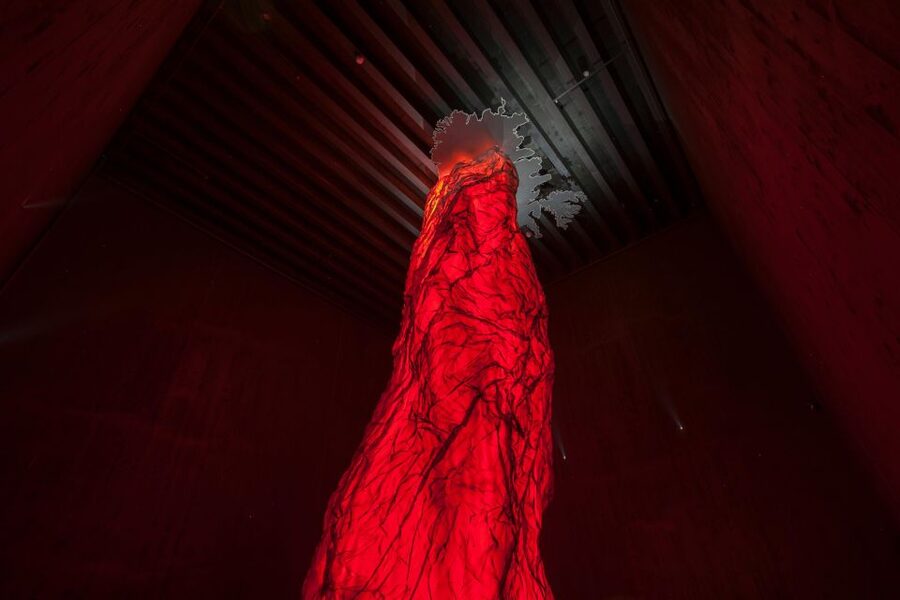
REVIEW · VOLCANO CRATERS & LAVA FIELDS
Volcano Exhibition and Cinema – Lava Centre Iceland
Volcanoes you can walk through. At Lava Centre Iceland, you get a hands-on exhibition plus an eruption cinema show that makes the south of Iceland feel close and real.
I like the way the displays explain how magma and tephra create volcanic landforms, and I like that the viewing deck frames major Iceland volcanoes like Eyjafjallajökull, Katla, and Hekla. One thing to consider: food and drinks are not included, so you may want to plan a snack break before or after.
This is a 1-day visit focused on learning, with interactive stops like live earthquake mapping and a dramatic earthquake simulator. You’ll also get gear for younger visitors, including ear muffs and flashlights, plus teddy bears for the kids.
In This Review
- Key things to notice before you go
- Getting oriented at Lava Centre Iceland in the Southern Region
- The interactive volcano exhibition: from magma to Iceland’s signature features
- Trembling Earth: live earthquake mapping and the simulator effect
- Fiery Heart of Iceland: magma up-flow, plate boundaries, and a mantle plume
- Tephra and the formation of volcanic deposits
- Cinema time: watching the latest eruptions in Grindavík and the Blue Lagoon
- Local Volcano section and the observation deck views
- Price and value: why $42 can feel fair for a structured 1-day visit
- How long you should plan for, and how to pace it
- What this experience is best for (and who should match it to their trip)
- Practical tips that help you enjoy Lava Centre more
- Should you book Lava Centre Volcano Exhibition and Cinema?
Key things to notice before you go
- Eyjafjallajökull, Katla, and Hekla are part of the big-picture story from the start
- Live earthquakes on a map plus a simulated earthquake in the Trembling Earth section
- The Fiery Heart of Iceland display explains magma up-flow and a mantle plume hot spot beneath Iceland
- You’ll connect magma, lava, and tephra to how Iceland’s black sands and colorful mountains form
- The cinema covers the latest eruptions in Grindavík and the Blue Lagoon, then you can look up at real volcano views
- A panoramic look at four large active but dormant volcanoes plus volcanic islands from the Local Volcano area
Getting oriented at Lava Centre Iceland in the Southern Region
Lava Centre is built for one clear goal: help you understand Iceland’s volcanoes without turning it into a lecture hall. From the start, the setting matters. You’re in the southern region with volcano country around you, so even when the experience is indoors, it still feels tied to the real terrain outside.
Your ticket covers the exhibition, the cinema, and access to the observation deck. That matters because the day has a natural flow. You watch, you experiment, and then you step out to connect the science to what you can see.
One small practical note: since food and drinks are not included, I’d plan your timing around a meal elsewhere. The visit can be packed with stations, so a hungry stomach can turn “learning time” into “quick exit time.”
The interactive volcano exhibition: from magma to Iceland’s signature features
The exhibition is built like a guided route through how Iceland’s volcanism works. Instead of just naming volcanoes, it explains the building blocks: rising magma, volcanic structures, and how eruptions reshape the land.
One of the most useful parts is how the displays walk you from magma to eruption products. They separate terms that are easy to mix up:
- Magma is molten rock inside the crust and mantle
- When magma is expelled during an eruption, it’s called lava
- Tephra is airborne material, including small fragments that spread over wide areas
That sounds technical, but it’s actually the kind of info that helps you decode what you’re seeing in Iceland. For example, you’ll learn why you get black sands and why the country can show colorful mountains and other dramatic features. When you connect the color and texture of the ground to processes in the earth, the scenery makes more sense.
You’ll also spend time in the Magma Learning Center area, where the focus is on volcanic structures. If you like “how things are built,” this is the section that rewards that mindset. It’s also a good place for families, because interactive elements tend to keep attention moving from station to station.
More craters still warm underfoot:
- Ice Cave by Katla Volcano Super Jeep Tour from Vik★ 4.5 · 1,100 reviews
- Lava Centre Interactive Volcano Exhibition★ 4.5 · 209 reviews
- Katla Volcano Ice Cave – Super Jeep Tour from Vik★ 4.5 · 199 reviews
Trembling Earth: live earthquake mapping and the simulator effect
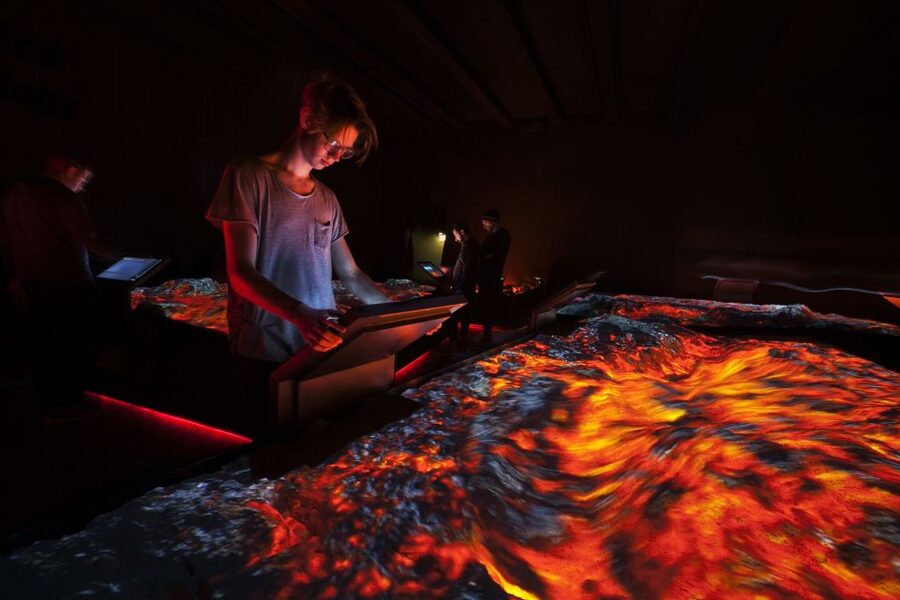
If the exhibition is about how volcanoes form, the Trembling Earth section is about why earthquakes are such a regular part of Iceland. The core idea explained here is tectonic motion. As tectonic plates diverge and magma rises, the region experiences frequent earthquakes.
What makes this section more than just background reading is the mix of real-time and hands-on components. You’ll see live earthquakes on a map, which gives you a sense of ongoing activity instead of treating earthquakes as something that happened only in the past.
Then comes the simulator. It’s designed to make the idea physical, letting you experience the drama of an earthquake in a controlled setting. Even if you already know the theory, this is the part that tends to “stick” because your body understands the sensation better than your brain can.
This is where I think the provided ear muffs can also be especially relevant. If the simulator uses sound and you’re sensitive to it, having the right gear helps you focus on the experience instead of the discomfort.
Fiery Heart of Iceland: magma up-flow, plate boundaries, and a mantle plume
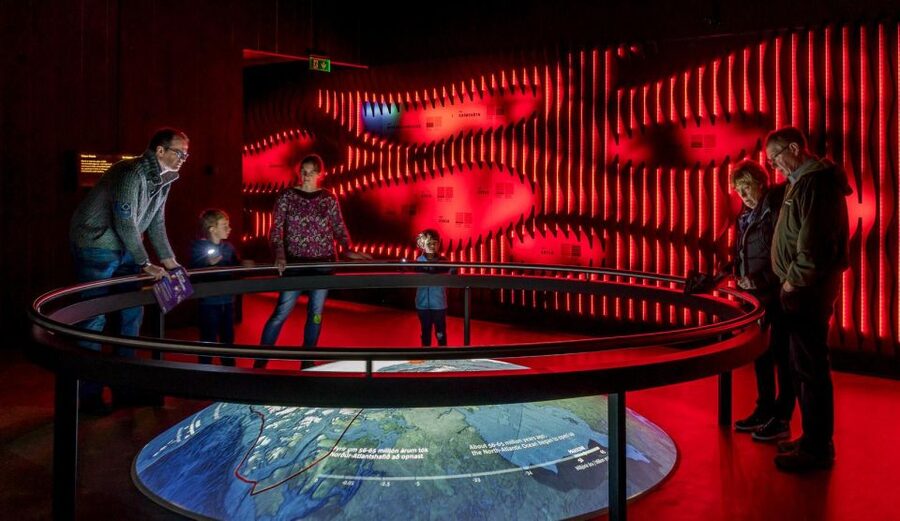
The Fiery Heart of Iceland display is where the story gets more connected and more specific. The show explains normal up-flow of magma at diverging plate boundaries, then adds the role of a mantle plume or hot spot beneath Iceland. The display pinpoints that hot spot in the central highlands.
If you tend to wonder why Iceland is so volcanically active, this is the section that answers it in a visual and structured way. You’re not just hearing that Iceland has volcanoes. You’re learning why the system keeps feeding itself.
I also like how the exhibition uses definitions to reduce confusion as you go. When you repeatedly hear the chain of events, magma rises, erupts, becomes lava or tephra, and then spreads, you start to see the logic behind Iceland’s fast-changing scenery. It’s not random. It’s a system.
Tephra and the formation of volcanic deposits
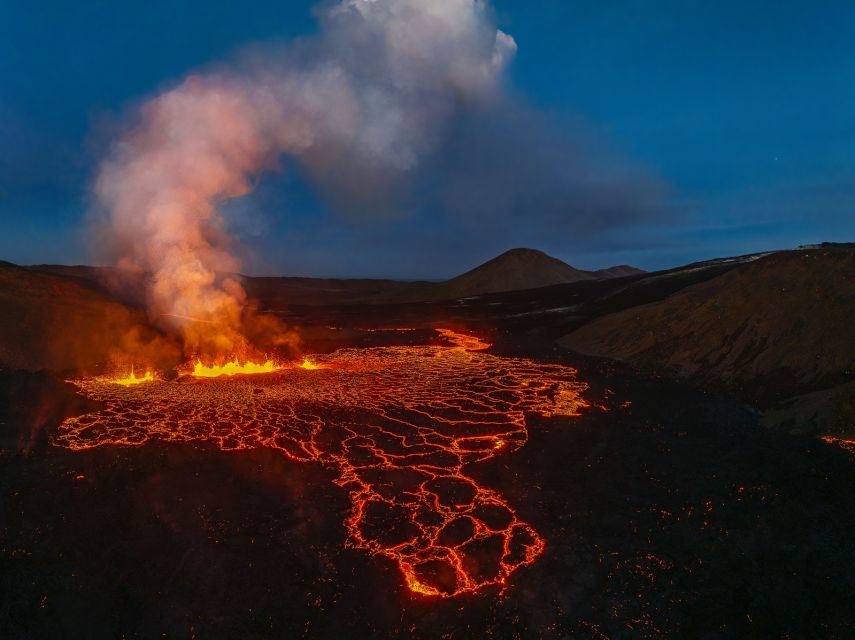
The exhibition includes a clear explanation of how tephra forms, and that’s a big deal for understanding Iceland’s ground.
You’ll learn that tephra can form when magma encounters water or ice. It can also form if gaseous magma is very viscous, which affects how the eruption breaks apart and spreads. Pieces of magma splinter into fragments of different sizes, and those fragments can spread over large areas.
For you, that translates into a better “why” behind what you might notice in Iceland: how ash and fragments can shape travel routes, how certain deposits can extend farther than people expect, and why volcanic events can change the look and feel of an area even after the main eruption is over.
This is the kind of topic that’s easy to gloss over in text. Here, the exhibition treats it like part of the cause-and-effect chain, which is exactly what helps during a trip.
More indoor hours well spent:


Cinema time: watching the latest eruptions in Grindavík and the Blue Lagoon
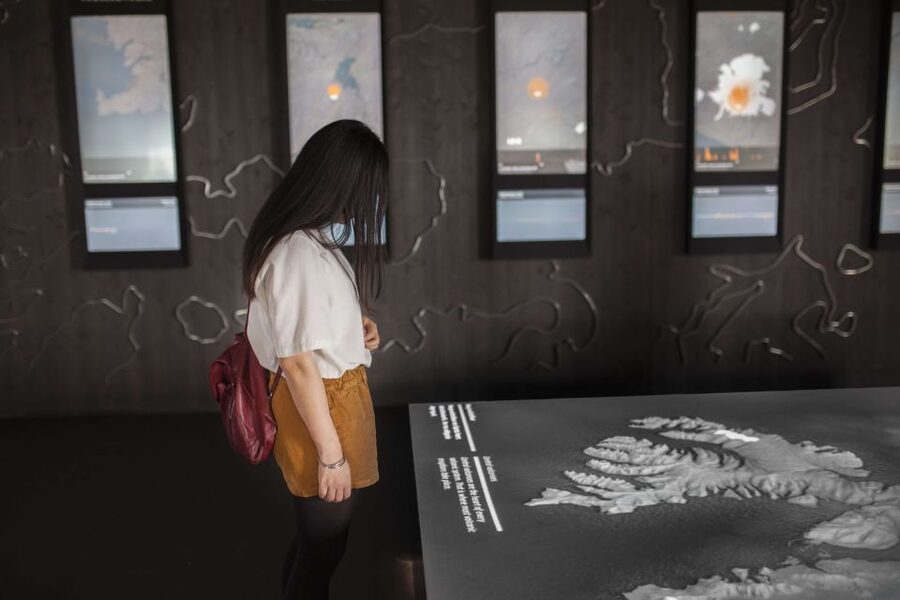
After the exhibition stations, the cinema gives your learning a visual anchor. The show focuses on the latest eruptions in Grindavík and the Blue Lagoon, letting you connect what you’ve studied about volcanic behavior to footage and context.
This is especially useful if you’re short on time. Instead of trying to “piece together” eruption stories from scattered sources, you get a clear viewing session that ties back to the physical science you saw inside.
Then you can do something I always find underrated: step from the cinema back toward the observation areas. That change of viewpoint helps your brain stitch together two kinds of understanding, what you see on a screen and what you can see in real volcanic country.
Local Volcano section and the observation deck views
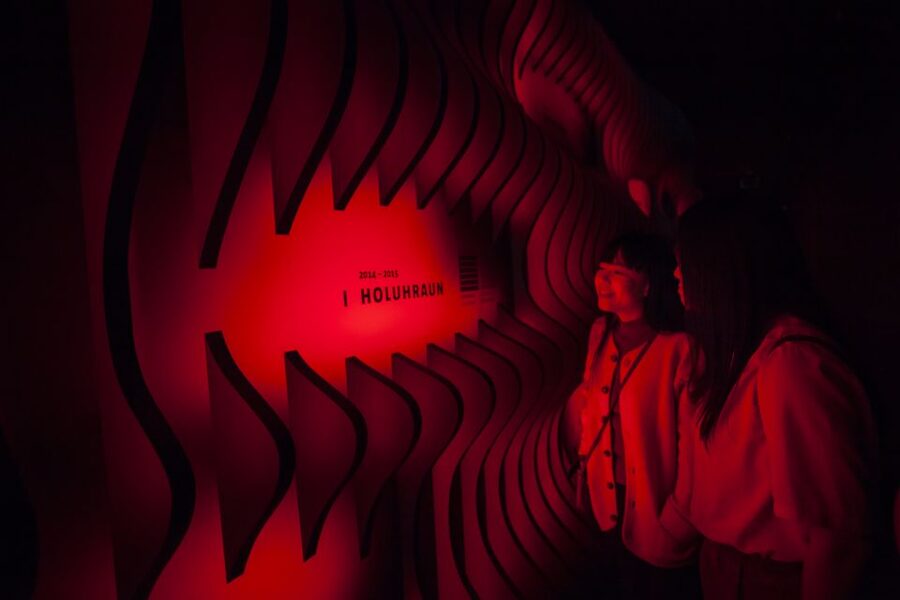
The Local Volcano area helps you translate the general science into a specific “look around you” moment. Here, you get a panoramic view of four large volcanoes that are active but dormant, plus a group of volcanic islands.
A useful detail is that all of these are different types and natures. Two of them are among the most active and productive volcanoes in Iceland. Even without turning it into a memorization test, that’s the kind of framing that makes your viewpoint feel meaningful instead of generic.
Then you have the observation deck option. If you want fresh air and an eye-level sense of scale, this is where you can do it. The view is also a practical payoff for the whole day. You started inside learning how volcanic structures form. Now you can look outward and see volcanoes as part of a living system.
Price and value: why $42 can feel fair for a structured 1-day visit
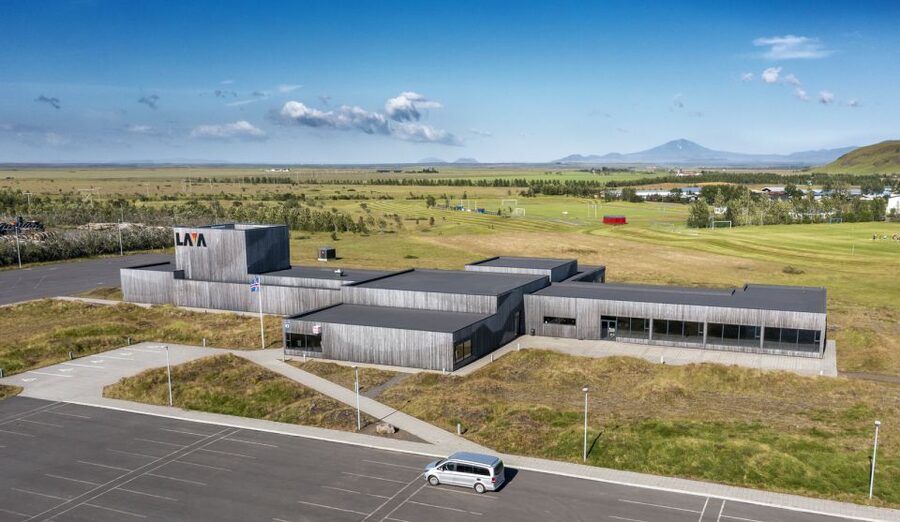
At about $42 per person for a 1-day experience, the value comes from what’s packed into the ticket. You’re not only buying an exhibition. You’re also buying the cinema and the observation deck access.
That combination matters. Many attraction tickets cover one format, a museum floor or a viewpoint. Here, you get a cycle:
1) Interactive learning
2) A film that gives you eruption context
3) Real views from where you’re standing
That’s a smart way to use time in Iceland’s south, especially if your schedule doesn’t allow for a long day of hiking or a far-flung detour.
The one place where I’d tell you to prepare is food. Since drinks and snacks are not included, you’ll either eat nearby before you go or plan a simple meal after.
How long you should plan for, and how to pace it
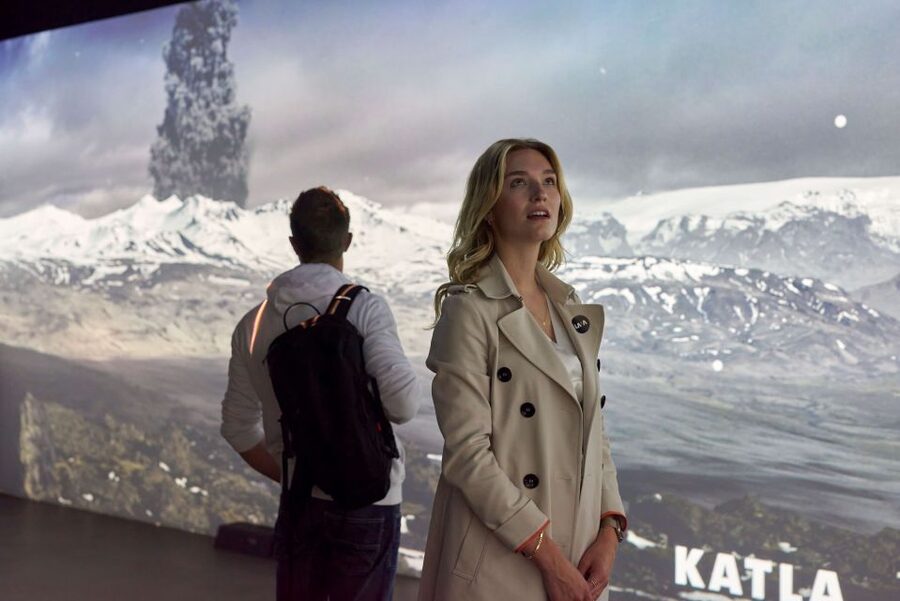
Even though it’s a 1-day ticket, you don’t need to treat it like an all-day marathon. You can do the main route and still have energy to enjoy the views.
In practical terms, I’d plan around 1 hour for a focused circuit, then add extra time if you enjoy reading details at the stations or if you want to linger at the observation deck. The interactive parts can slow you down in a good way, but once you’ve got the flow, it’s not hard to keep moving.
If you’re traveling with kids, pacing is key. Stations tend to work best when you treat them like short chapters rather than trying to absorb everything at once.
What this experience is best for (and who should match it to their trip)
This is a great fit if you want a volcano day with real substance, not just a quick viewpoint. If you enjoy cause-and-effect learning, the magma and tephra explanations plus the earthquake mapping are exactly the kind of content that sticks.
It’s also a strong option for families and mixed-age groups, because the exhibition uses interactive steps and provides kid-friendly touches like ear muffs, flashlights, and teddy bears.
If your main goal is to witness volcano activity directly outdoors, this is not an “in the action” type experience. It’s a science and cinema experience. Think of it as the day you understand the volcanoes, then carry that understanding into the rest of your Iceland trip.
Practical tips that help you enjoy Lava Centre more
A few small decisions will improve your experience more than you’d think.
First, dress for being outside at the observation deck. Even if the cinema and exhibition are indoors, you’ll likely want time at the viewing areas, and Iceland weather changes fast.
Second, be ready to use the provided gear if it’s offered during the stations. Ear muffs are helpful for sound-heavy parts, and the included flashlights and teddy bears are clearly aimed at younger visitors, but adults may find them useful for certain display areas too.
Third, if you like earthquakes and geology, spend extra time in the Trembling Earth area. Seeing live earthquakes on a map plus experiencing the simulator gives you a stronger sense of how often these events occur.
Finally, go with a simple mindset: you’re building a mental model of Iceland’s volcano system. When you treat each section as one piece of that model, the whole day feels cohesive.
Should you book Lava Centre Volcano Exhibition and Cinema?
I’d book this if you want a structured, high-impact volcano day in the south of Iceland. For the price, you get the full package: interactive exhibition, cinema showings of the latest activity including Grindavík and the Blue Lagoon, and observation deck time.
Skip it only if you already know you want an outdoor, hands-on volcano adventure where you’re close to vents and ash in real conditions. Lava Centre is about understanding and seeing volcanoes from afar, and it does that job very well.
If you’re planning a tight itinerary, this is also a smart pick. It’s a 1-day experience, it’s wheelchair accessible, and it teaches you what to look for when you’re out in Iceland’s volcanic country.
Fresh on the forecast for South Iceland
- Private Day Trip in Landmannalaugar South Region area on a 4×4 truck
★ 5.0 · 7 reviews - Eyjafjallajökull by Super Jeep
★ 5.0 · 8 reviews - Iceland: Vatnajokull Glacier Hike and Ice Cave Tour
★ 4.6 · 8 reviews - Scenic Buggy Adventure 1 hour
★ 3.9 · 8 reviews - Reykjavík: Westman Islands, Volcanoes and Puffins Minibus Tour
★ 4.0 · 8 reviews - Golden Circle
★ 5.0 · 8 reviews - Glacier Hike Starting from Solheimajokull
★ 4.5 · 8 reviews
Volcano Craters & Lava Fields, compared.
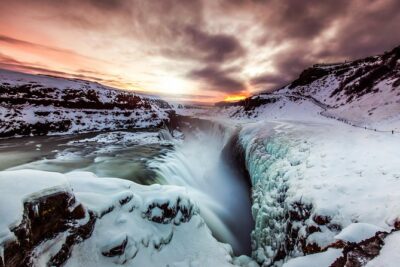
Golden Circle, Volcano Crater and Blue Lagoon Small-Group Tour
Read our review →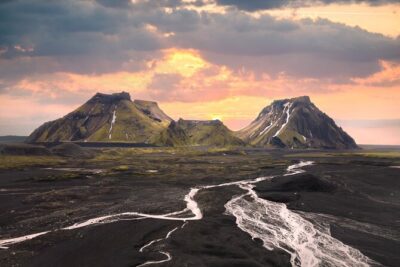
Ice Cave by Katla Volcano Super Jeep Tour from Vik
Read our review →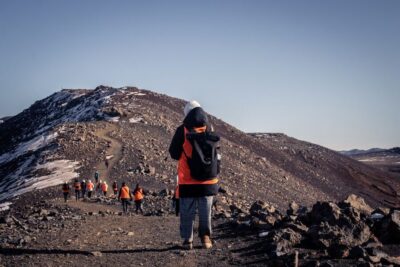
Volcano Eruption Site and Reykjanes Hiking Tour
Read our review →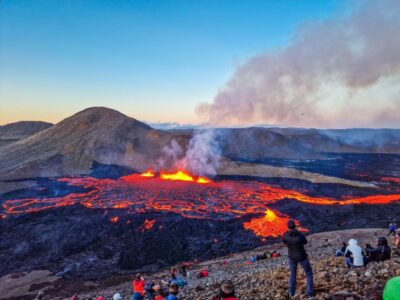
Guided Afternoon Hiking Tour to New Volcano Site
Read our review →
Iceland Hiking Tour to Fagradalsfjall Volcano with Local Guide
Read our review →Browse the lists this tour appears in