
REVIEW · ICELANDIC HORSE EXPERIENCES
Hveragerdi: The Siggi Horse Riding Tour
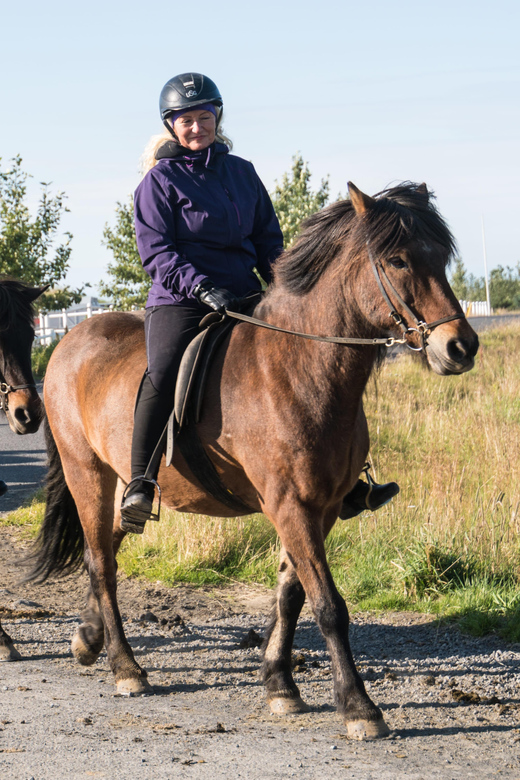
A ride on Icelandic horses feels like a shortcut to the country’s rhythm. This Hveragerði tour takes you out from the farm area and into scenic countryside, where you may get a real shot at the horse’s signature gait, the tölt. It’s also practical, with the right gear and guides built in, so you can focus on the experience instead of logistics.
I particularly like two things: the Icelandic-horse focus (including time to try tölting) and the way the ride is guided by professionals who keep the pacing smooth and safe. From the route description and what riders say afterward, the horses are cared for well, and the whole setup feels organized.
One thing to consider is that the scenery can vary with wind and weather, and you may end up in a slower group flow if you’re near first-timers or new riders. If you’re hoping for a totally quiet, private ride through postcard scenery the whole way, this might feel a bit controlled at times.
In This Review
- Quick hits before you saddle up
- Hveragerði Horse Riding: The Siggi Tour’s Real Appeal
- Getting There: Vellir Base, Reykjavík Transfer, and Timing That Works
- What You Actually Ride Through: Meadows, Lava Fields, Volcanic Views, Farms
- Tölt 101: How This Tour Helps You Feel the Icelandic Gait
- The Itinerary, Step by Step: What Happens After You Meet the Horses
- Start at Vellir, then head out toward Ölfus country
- The main ride: trails designed for views and gait time
- River section: sometimes a crossing or a warm river moment
- Return: back toward the meeting farm area
- Price and Value: $136 for 2 Hours That Actually Adds Up
- What to Bring (and What to Skip) for a Comfortable Ride
- Who This Tour Fits Best (And Who Should Skip It)
- How the Group Experience Feels: Organized, but Not Always Private
- The Horses: Well Cared For and Built for Rider Confidence
- Should You Book This Siggi Horse Riding Tour?
- FAQ
- Where is the tour based, and when should I arrive?
- How long is the tour, and how much time is riding?
- Is the tour guided, and what language is offered?
- Does the tour include transportation from Reykjavík?
- What safety equipment and weather gear do I get?
- What should I bring with me?
- Are backpacks allowed?
- Are small bags okay?
- What camera gear is allowed?
- Who can take the tour, and who should not?
Quick hits before you saddle up
- Tölt time: The route is picked to give you chances to experience the gait
- Farm-to-country riding: Meadows, lava fields, farmland, and a river crossing area
- Professional English-speaking guidance: Safety gear and experienced handling
- Weather and wind matter: Routes adjust based on conditions
- Iceland-ready gear: Helmet, rain gear, and winter overalls included
- Reykjavík transfer included: You’re not stuck figuring out transport
Hveragerði Horse Riding: The Siggi Tour’s Real Appeal
This is one of those Iceland activities that’s simple on paper and memorable in practice. You’re not just watching Iceland from a bus window. You’re moving at horse speed through volcanic country, with guides guiding the route and the rhythm.
The big reason I’d point you here is the Icelandic horse gait. Most people sign up because they’ve heard the horses do something different, and the tour is designed to let you feel it. Even if you’ve never ridden before, the setup aims to make the tölting experience realistic instead of just theoretical.
The second reason is how grounded the tour feels. You start at the farm and ride through working countryside, past fields and farms, so you get context for how people live with the land. You’ll spend time seeing the mix of meadow, lava texture, and farmland, rather than just a quick loop of random scenery.
Getting There: Vellir Base, Reykjavík Transfer, and Timing That Works
You’ll meet at the farm on the Hveragerði area, and it’s close enough to Reykjavík that the tour includes transfer from and to Reykjavík. That matters more than it sounds. In Iceland, the driving game can steal time and energy from the actual activity.
Plan to arrive 10 to 15 minutes before your start time. This isn’t just a polite suggestion. The tour includes fitting safety equipment like helmets and weather gear, and you’ll want a little buffer so you’re relaxed when your horse is assigned.
In terms of pacing, the overall tour runs about 2 hours, with 1.5 to 2 hours of riding inside that window. So you’ll spend enough time in the saddle to feel like you did something, not just a short “sit and pose” experience.
More tolts across the lava heath:
- Reykjavik: Red Lava Horse Riding Tour★ 4.8 · 2,383 reviews
- Icelandic Horse Riding Tour & Pickup Option from Reykjavik★ 4.8 · 1,662 reviews
- Icelandic Horseback Riding Tour with Pickup Option from Reykjavik★ 5.0 · 1,145 reviews
What You Actually Ride Through: Meadows, Lava Fields, Volcanic Views, Farms
The ride is built around smart routing. They choose the best riding routes depending on weather and wind conditions, so the exact trail feel can change day to day. In Iceland that’s normal, and it’s also why this is more than a generic loop.
On a typical run, you’ll travel through:
- Meadows where the footing and rhythm can feel calmer
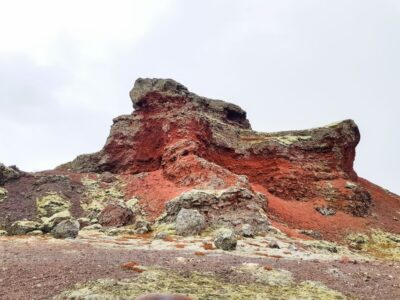
- Lava fields for that unmistakable Iceland texture underfoot
- A small river area, sometimes allowing a crossing or warm river experience when conditions are right
- Farmland and multiple farms, which gives you a sense of agriculture today and how it has developed over decades
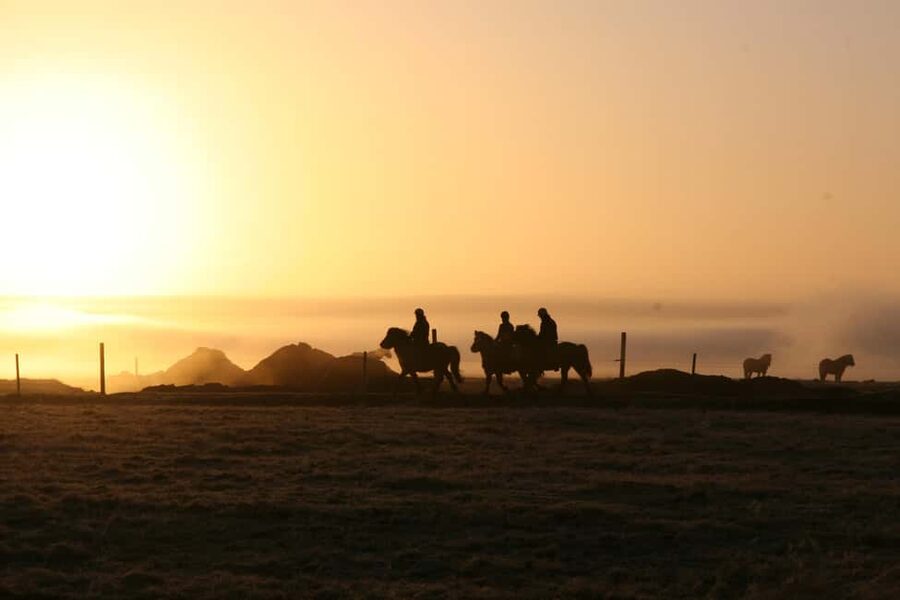
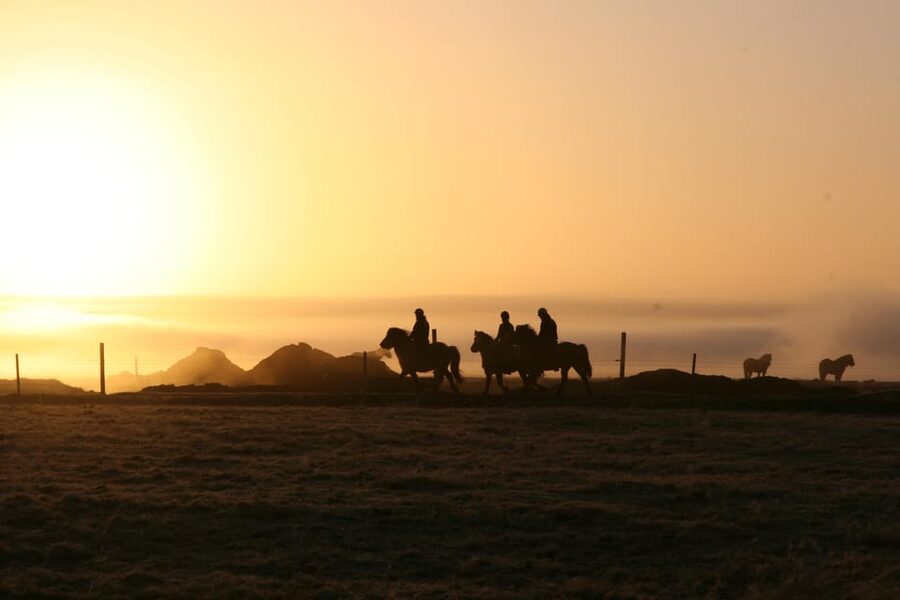
The views you’re after are the volcanic ones: farmland framed by volcanic mountains, with open country that makes the Iceland skies do most of the work. If you get a sunnier day, it can look dramatic fast. If it’s windier or darker, the experience shifts to “Iceland is wild,” which still can be satisfying, just less cinematic.
Tölt 101: How This Tour Helps You Feel the Icelandic Gait
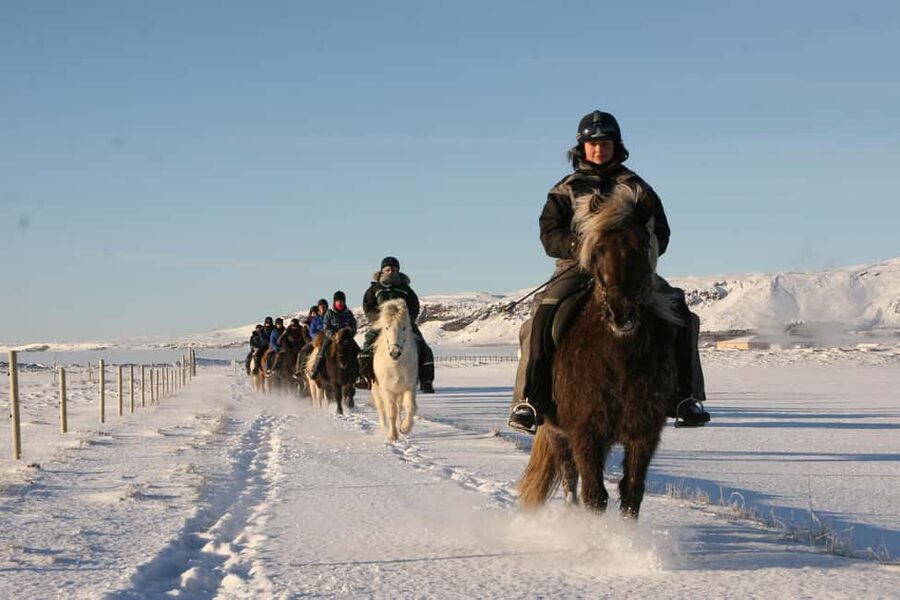
The tour is specifically described as a good chance to experience the “tölt,” the Icelandic horse gait that’s smooth and distinct. Here’s what that means for you in practical terms.
First, you’re riding on a trail with enough space and time for the guides to help you settle your position. Trying tölting isn’t just about asking the horse to move faster. It’s about timing, balance, and staying relaxed while the horse finds its special rhythm.
Second, the guides matter. A good guide can help you do the basic things correctly, so your body doesn’t fight the movement. Multiple riders mention how attentive and professional the guides are, and that lines up with what you want if tölting is a priority.
Third, group dynamics can affect your personal pace. One rider noted they couldn’t tölting as much due to slower riders directly in front. Translation: if you want the most time in the gait, you’ll benefit from being comfortable communicating with the guide and following their spacing plan.
The Itinerary, Step by Step: What Happens After You Meet the Horses
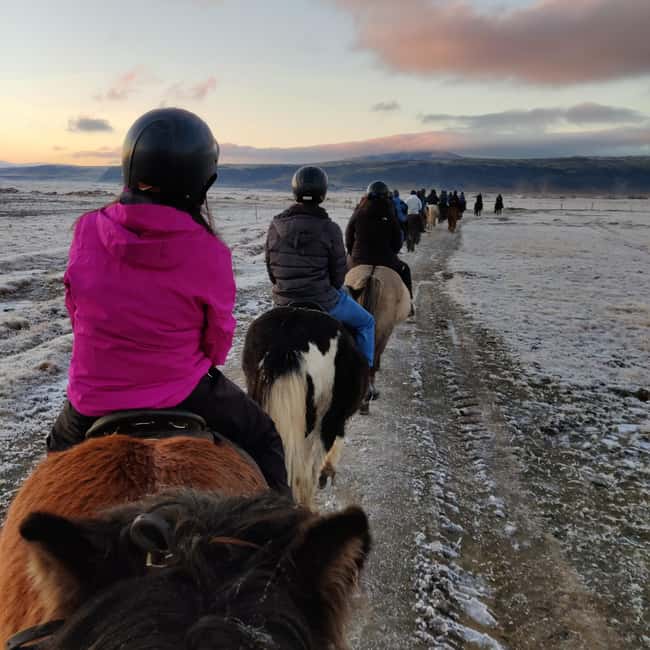
Also waiting on skies over Reykjavik
Start at Vellir, then head out toward Ölfus country
You begin at Vellir. Expect time to meet the guide, get fitted with safety gear, and climb on with your group. The early moments set the tone. If you’re new, don’t rush. You’ll learn what the guide expects before the trail gets rolling.
After that, you’re in the countryside around Ölfus, moving through open areas where the scenery changes as you ride. This is not an indoor riding arena experience. You’re out among meadows, lava textures, and farmland edges.
The main ride: trails designed for views and gait time
The middle stretch is where the value is. You’ll ride through scenic surroundings of the farm and beyond, with the guide choosing routes based on wind and weather. That means you might ride one day for maximum open views and another day for safer footing and rideability.
This is also where tölting becomes the target. It might not be constant for the whole ride, but the trail and guiding approach are set up to give you opportunities.
River section: sometimes a crossing or a warm river moment
The route description includes a small river, and riders note that you can even pass a warm river with the horses. I wouldn’t assume a dramatic “splash crossing” every time, but I would expect some kind of river-related moment as part of the ride story.
In cold or windy conditions, river areas can feel extra intense. That’s also why the winter overalls and rain gear are included. You’ll be more comfortable if you go in expecting Iceland weather rather than trying to outsmart it.
Return: back toward the meeting farm area
When you come back, you’ll have the decompression moment that makes horse riding great. You’ll be a little tired, a little cold (if the weather is doing its thing), and mostly happy. Most of what you’ll remember is the movement through real terrain, not a staged photo stop.
Price and Value: $136 for 2 Hours That Actually Adds Up
At $136 per person, this isn’t a “cheap and cheerful” activity. But it also isn’t priced like a luxury private guiding experience. The value comes from the total package.
You’re getting:
- A full 2-hour tour block, with 1.5 to 2 hours of riding
- English-speaking guidance
- Riding and safety equipment (helmet, rain gear, winter overalls)
- Transfer from and to Reykjavík
- Icelandic horses with time aimed at tölting
That equipment part matters in Iceland. If you had to rent gear, buy layers, and solve weather protection yourself, the real cost would rise quickly. Here, the tour includes the “Iceland survival basics” you would otherwise have to figure out.
If your goal is authentic countryside time on an Icelandic horse, $136 can feel reasonable. If your only interest is a short photo ride, you might find yourself wishing it were longer or cheaper.
What to Bring (and What to Skip) for a Comfortable Ride
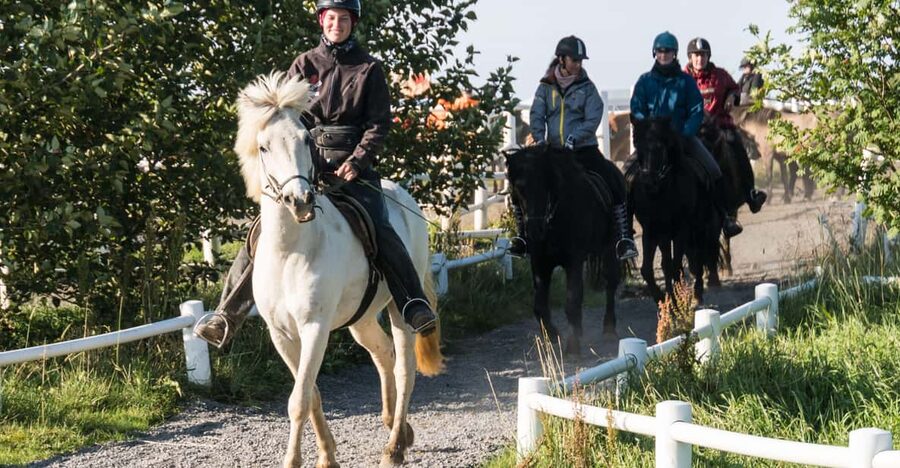
You’ll be much happier if you pack for movement and weather. The tour asks you to bring:
- Hiking shoes
- Comfortable clothes
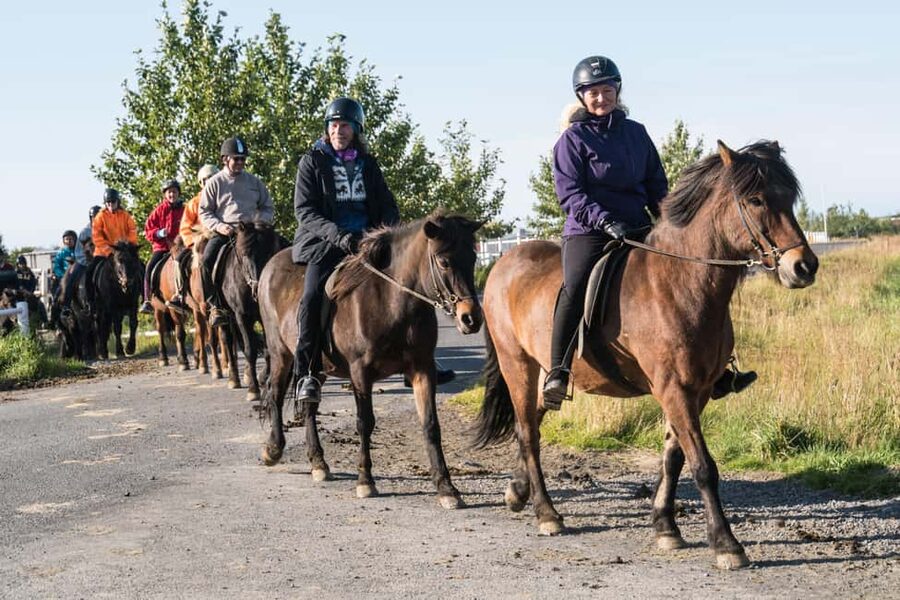
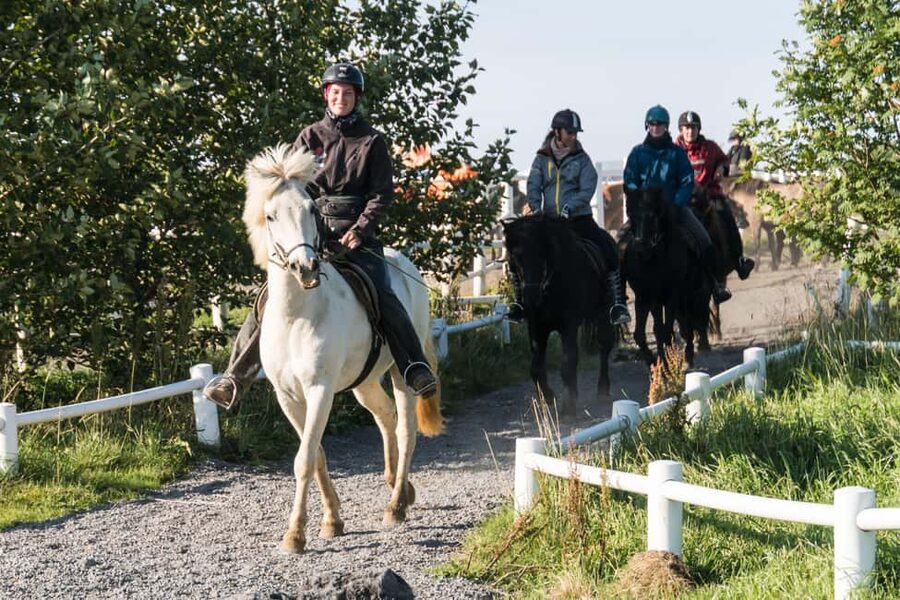
The tour provides rain gear, winter overalls, and a helmet, so you can focus on layers and comfort rather than searching for the right outerwear. Still, wear shoes that work for uneven ground around a farm and stable area.
Also note the restrictions:
- Not allowed: backpacks and professional cameras
- Small waist bags are allowed
And here’s a practical extra tip from the ride experience: if insects bother you, consider bringing a fly cap. One rider specifically recommended it because small insects can be irritating out on trails.
Who This Tour Fits Best (And Who Should Skip It)
This is a good match if you:
- Want a guided Icelandic horse ride with chances to experience tölting
- Prefer countryside time around farmland and volcanic terrain
- Like the idea of having a guide handle safety and routing choices based on wind and weather
It might not be the best fit if you:
- Need wheelchair access, since it’s not suitable for wheelchair users
- Have mobility limits that affect getting on and off a horse, since it includes standard riding safety equipment but no special accessibility info
- Are traveling with children under 7 years
- Are over the 110 kg (243 lbs) weight limit
If you’re a beginner, you can still enjoy it, and the guiding approach is designed to help. If you’re an experienced rider, you may find it calmer than you expect, especially if your group includes first-timers. The upside is a smoother, less stressful ride.
How the Group Experience Feels: Organized, but Not Always Private
The tour is organized, with professional guides and well-kept horses. That’s a big plus because horse riding is one of those activities where “well run” makes the difference between relaxed and stressful.
That said, your personal experience can be shaped by group flow. One rider described it as a bit like an assembly line, which usually means predictable staging and a controlled pace. Another rider also noted limitations on tölting due to slower riders in front.
So if you’re chasing a lone-wander fantasy, keep expectations realistic. This is a guided group tour, and the quality comes from good guidance and good horses, not from total solitude.
The Horses: Well Cared For and Built for Rider Confidence
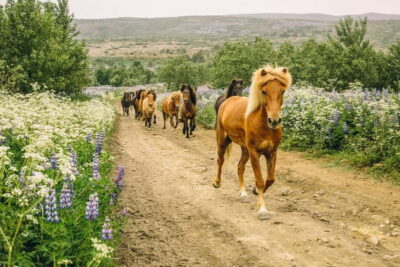
A repeated theme is that the horses are well taken care of and appear healthy and calm. Icelandic horses are known for their unique gaits, but rider comfort starts with temperament.
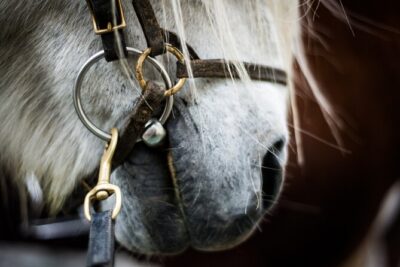
What you want to notice when you meet your horse is how settled it seems, how the tack fits, and how the guide handles transitions. In the best moments, the whole thing stops feeling like training and starts feeling like travel.
You’ll feel that especially if the guide finds opportunities for tölting and keeps you aligned with the group. A smooth guide experience tends to make the horses feel friendlier and the ride feel longer.
Should You Book This Siggi Horse Riding Tour?
Book this tour if you want a structured, Iceland-countryside horse ride with Icelandic horses and a real chance to feel the tölting gait. The included gear, the professional English-speaking guidance, and the Reykjavík transfer make it easier than most independent farm-riding plans.
Skip it or consider alternatives if you’re sensitive to group pace, want maximum privacy, or are riding in very unpredictable weather where wind and visibility might limit how much you talk with the guide along the way. Also, if insects are a problem for you, pack something like a fly cap, so you can enjoy the ride instead of swatting your way through it.
Bottom line: for most people, this is a solid value ride because it removes the hassle and delivers the Iceland horse experience you actually came for.
FAQ
Where is the tour based, and when should I arrive?
You’ll meet at the farm near Hveragerði (Vellir). Arrive 10 to 15 minutes before your start time so you have time for gear fitting and meeting your guide.
How long is the tour, and how much time is riding?
The total duration is 2 hours. You should expect about 1.5 to 2 hours of actual riding.
Is the tour guided, and what language is offered?
Yes. You ride with an English speaking guide.
Does the tour include transportation from Reykjavík?
Yes. Transfer from and to Reykjavík is included.
What safety equipment and weather gear do I get?
The tour includes riding and safety equipment, including a helmet, rain gear, and winter overalls.
What should I bring with me?
Bring hiking shoes and comfortable clothes.
Are backpacks allowed?
No, backpacks are not allowed.
Are small bags okay?
Small waist bags are allowed.
What camera gear is allowed?
Professional cameras are not allowed.
Who can take the tour, and who should not?
It’s not suitable for children under 7 years, wheelchair users, and people over 110 kg (243 lbs).
Fresh on the forecast for Reykjavik
- Iceland Game of Thrones Tours
★ 5.0 · 7 reviews - Reykjavik: Golden Circle Tour & Laugarás Lagoon Entry
★ 4.7 · 7 reviews - Reykjavik Private 4-Hour Tour with Transfer
★ 5.0 · 7 reviews - Thórsmörk, Valley of Thór | Private Tour | PRO Photos Included
★ 5.0 · 7 reviews - Reykjavik: Private Golden Circle and South Coast Tour
★ 5.0 · 7 reviews - Reykjavik: Small-Group Northern Lights Tour with Pickup
★ 5.0 · 7 reviews - Reykjavik: Golden Circle Super Jeep Tour with Snowmobiling
★ 4.9 · 7 reviews
Icelandic Horse Experiences, compared.
Icelandic Horse Riding Tour & Pickup Option from Reykjavik
Read our review →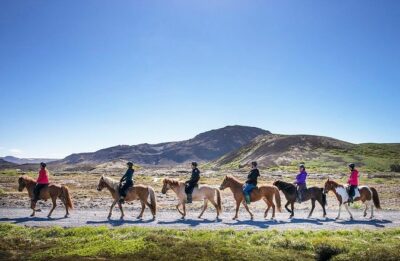
Icelandic Horseback Riding Tour with Pickup Option from Reykjavik
Read our review →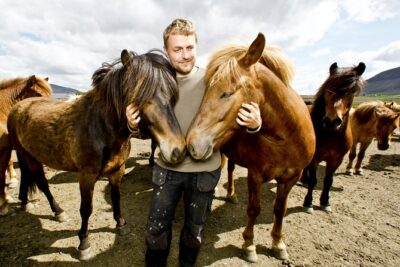
Icelandic Horseback Riding Tour Including Pick Up from Reykjavik
Read our review →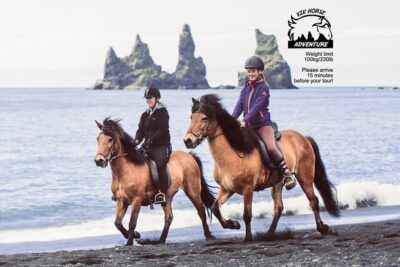
Golden Circle, Fridheimar Farm & Horses Small Group Tour from Reykjavik
Read our review →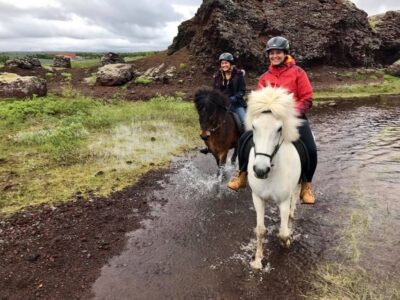
Small-Group Horse Volcano Riding Tour with Pickup
Read our review →Browse the lists this tour appears in