REVIEW · TOURS
From Reykjavik: Volcanic Peninsula & Grindavik Minibus Tour
Volcano country right near Reykjavik still surprises. I love Seltún for its sulfur-soaked steam vents and bubbling clay, and I also love the short Nátthagi hike for watching fresh volcanic history at eye level.
One thing to think about first: this is an active day with a hike and walking on rough ground, so it is not a great match if you have back issues, low fitness, or mobility limits.
In This Review
- Key takeaways before you go
- Reykjavik to Reykjanes: why this 6-hour mini-adventure is worth it
- Pickup and timing: the real rhythm of a half-day minibus tour
- Kleifarvatn Lake: a 97-meter-deep puzzle in dark water
- Seltún geothermal area in Krýsuvík: smell, color, and bubbling clay
- Grænavatn, the Green Lake crater: minerals that paint the water
- Nátthagi viewpoint and Fagradalsfjall: seeing lava history from above
- Grindavík after eruptions: the quiet reality behind the scenery
- Sundhnúkagígar and Svartsengi lava field: cooling rock that still breathes
- Price and value: what 107 dollars buys in Iceland time
- Who should book this tour, and who should skip it
- What to bring (and how to make the most of your photos)
- Should you book? My decision checklist
- FAQ
- How long is the tour from Reykjavik to the Reykjanes Peninsula?
- What is included in the price?
- Are meals and drinks included?
- What should I bring and wear?
- Is there any hiking or walking?
- Is the tour wheelchair accessible?
Key takeaways before you go
- Seltún geothermal area is a full sensory stop, smell first, then color and steam
- Nátthagi viewpoint hike lets you see lava fields and the Fagradalsfjall story from a high angle
- Kleifarvatn Lake is a 97-meter-deep mystery lake fed by groundwater through porous lava
- Grindavík after late 2023 eruptions shows the human side of geology, quiet and eerie
- Sundhnúkagígar / Svartsengi lava field gives you a guided walk through cooling, steam-emitting rock
Reykjavik to Reykjanes: why this 6-hour mini-adventure is worth it
This is the kind of Iceland trip that feels bigger than the time. In about six hours, you move from dark mystery lakes to geothermal steam vents, then end with lava fields and the eruption impact around Grindavík. You are not just looking at volcanoes, you are walking through the signs of active geology.
I also like that this one is designed to be understandable. A good guide helps you keep track of where you are in Iceland’s volcanic timeline, what you are seeing now, and why places look the way they do. If you are the type who gets frustrated with vague explanations, this format usually works.
Finally, it is good value for what you get: an expert guide, round-trip pickup and drop-off, and multiple stops that would be hard to piece together on your own in half a day.
Pickup and timing: the real rhythm of a half-day minibus tour
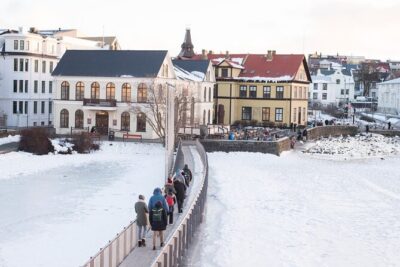
Plan for a start at 12:00 noon sharp at one of the authorized pickup points around Reykjavik. The early leg takes time because everyone needs to be collected, and that can take up to about 30 minutes depending on traffic and how spread out your group is.
Once you are on the road, you have a steady pattern: drives between sites, short timed photo stops, and a couple of longer moments where you can actually explore. The day includes one short hike to a viewpoint plus more walking around geothermal terrain. You finish back in Reykjavik by early evening, which is ideal if you still want dinner or a relaxing night in the city.
Also waiting on skies over Reykjavik
- Reykjavik: Golden Circle Full-Day Tour with Kerid Crater★ 4.8 · 24,485 reviews
- Reykjavik Food Walk – Local Foodie Adventure in Iceland★ 5.0 · 18,952 reviews
- From Reykjavik: Northern Lights Bus Tour with Hot Cocoa★ 4.3 · 13,947 reviews
Kleifarvatn Lake: a 97-meter-deep puzzle in dark water
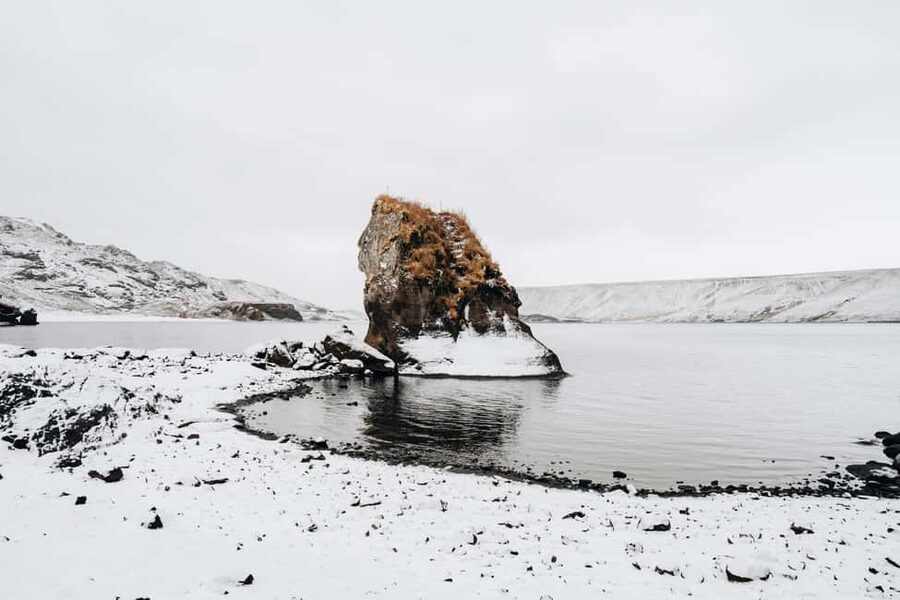
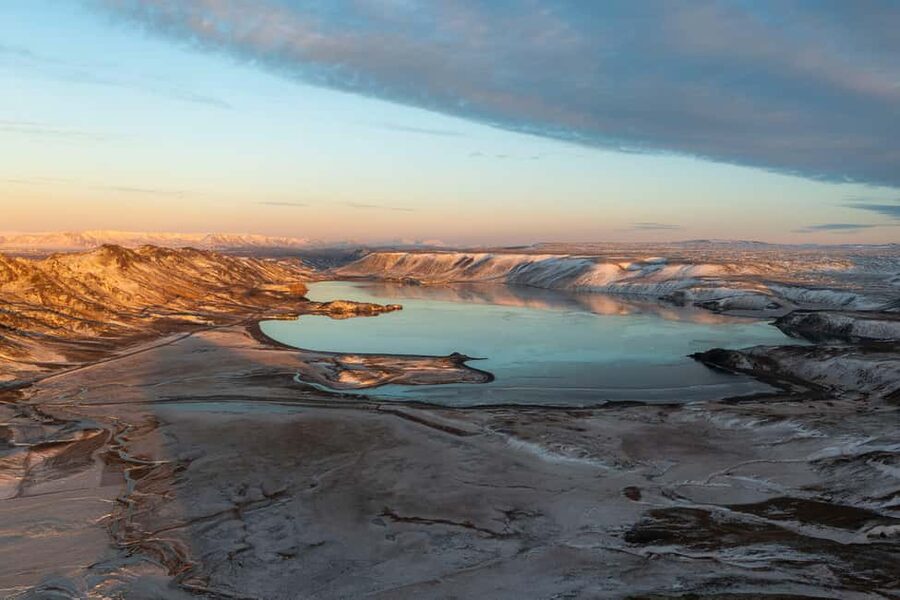
Your first major stop is Kleifarvatn Lake, about a 40-minute drive from Reykjavik. This lake is known for its depth, around 97 meters, and for how it functions like a sealed system. There are no visible inlets or outlets, so the water balance is driven by groundwater movement filtering through the porous lava fields.
The lake also brings myth into the geology. Local stories say a serpent-like creature may live beneath its dark waters. Even if you treat the legend as folklore, it helps you look at the lake with the right mood: still, eerie, and slightly out of place.
Practical tip: this is a photo stop, roughly 10 minutes. If you want shots without rushing, stand where you can include the lava formations or hills, not just the water. And dress for wind. Reykjanes weather can change quickly, even when the road drive is calm.
Seltún geothermal area in Krýsuvík: smell, color, and bubbling clay
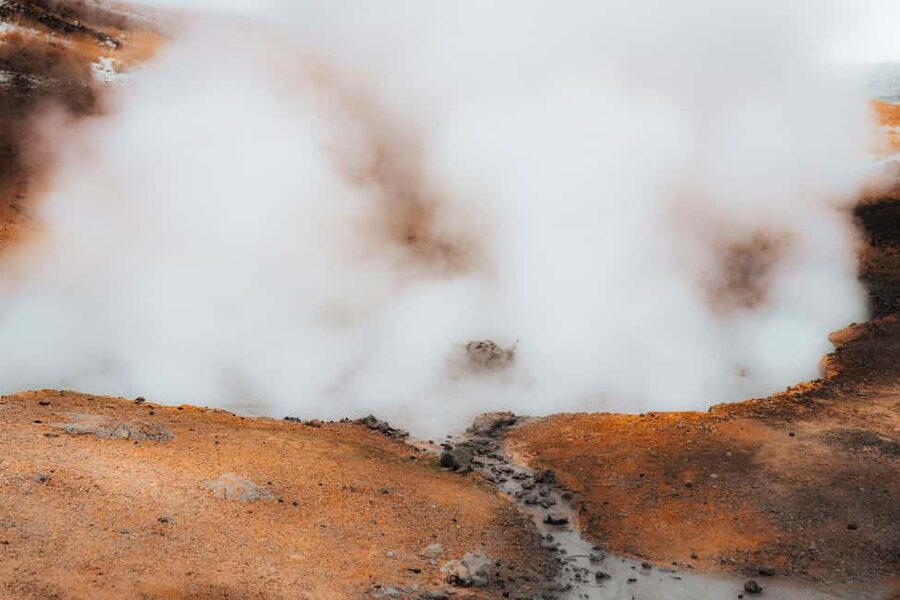
Next comes Seltún geothermal area in Krýsuvík, and this is where the tour turns from scenic to strange in the best way. The terrain looks like another world: fiery reds, yellows, and greys, plus steam rising from fumaroles and vents.
This is also where you learn fast that geothermal sites are not just visuals. You can smell the sulfur before you fully take it in. You will see bubbling mud pools and hissing vents, and there is usually a short walking loop that gives you time to find angles for photos without feeling like you are sprinting.
Time on site is about 25 minutes for photos, visiting, and some free time. That is enough to do a careful look, but not enough to get lost for long. Bring warm layers because steam can make the air feel moist, and cool wind can still bite.
Grænavatn, the Green Lake crater: minerals that paint the water
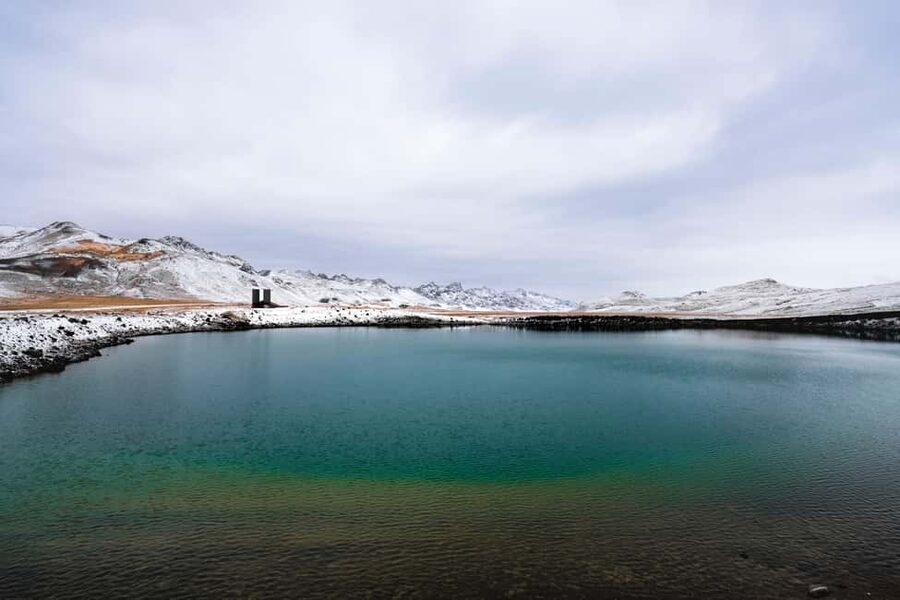
After Seltún, you stop at Grænavatn, often described as the Green Lake. This is a crater lake with a striking emerald tint, and the color comes from high sulfur and mineral concentrations.
The stop is shorter, around 10 minutes, and it makes sense. The main goal here is a quick look and a photo. If the light is good, the green can look almost unreal against the darker volcanic ground around it.
Practical tip: keep an eye on the horizon and the surrounding rocks. The lake is the star, but the contrast between the crater water and the rough terrain is what makes the photo feel Iceland-real.
Next clear spell around Reykjavik could go to:
Nátthagi viewpoint and Fagradalsfjall: seeing lava history from above
Now you get into the more active part of the day. The tour heads to Nátthagi, a valley near Fagradalsfjall, the volcano that erupted in 2021 after about 6,000 years of dormancy.
You are not just told the story. You walk to a viewpoint where you can take in the broader volcanic scene. The eruption produced lava that flowed across the land for about six months, and what you see now is the cooled and altered ground shaped by that event.
On a clear day, the viewpoint is the kind of stop where everything clicks: why lava forms ridges and fields, why some areas look darker and rougher, and how volcanic activity changes an entire region. Even when you are far from the danger, you still see signs like steam rising from parts of the area, a reminder that the ground does not fully “switch off” after an eruption.
Time matters here. The hike is about an hour total for walking plus viewpoint time. Wear sturdy shoes and keep your pace steady. Slippery spots can happen around geothermal ground, and you want energy left for photos.
Grindavík after eruptions: the quiet reality behind the scenery
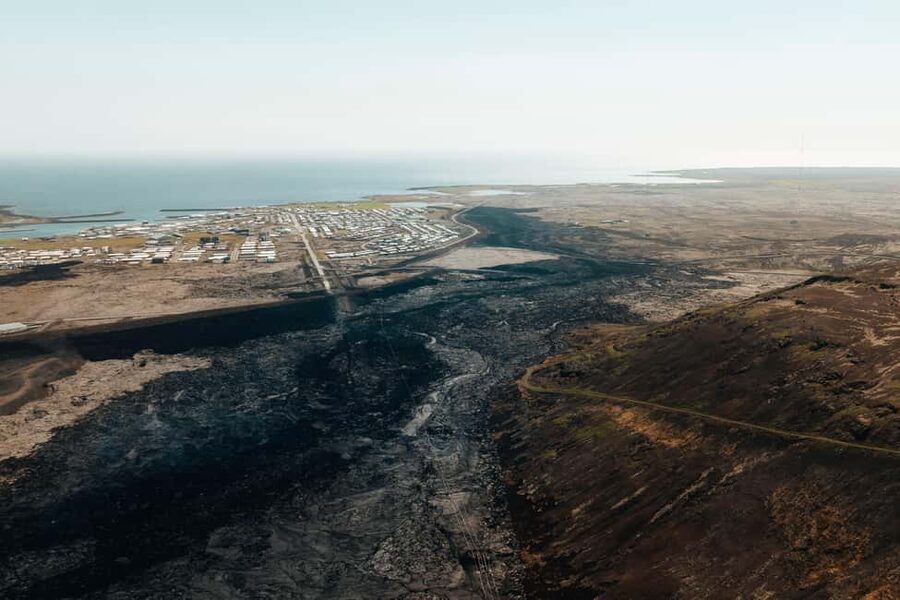
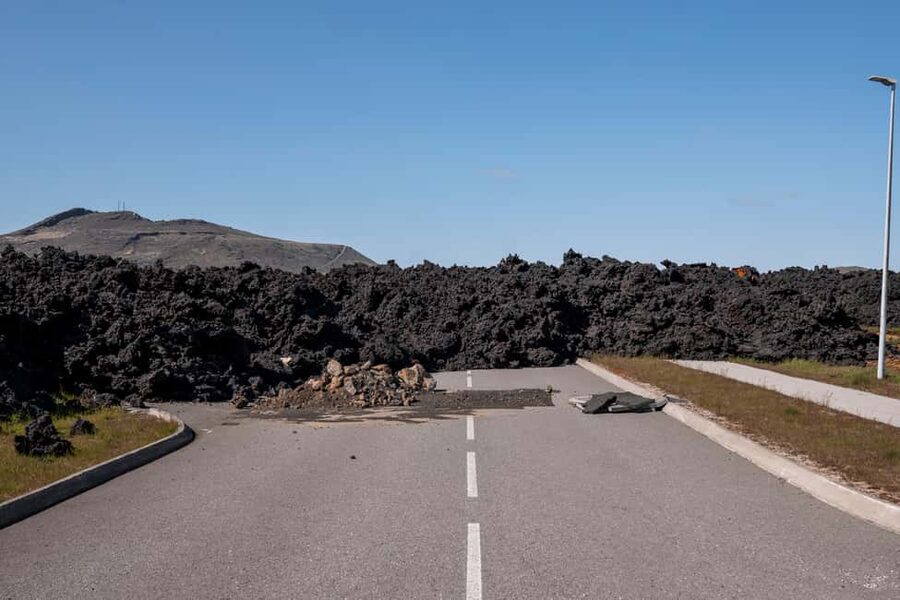
After the viewpoint, you travel toward Grindavík for a guided tour and pass-by sightseeing. The area has been reshaped since late 2023, after evacuations. What you see is not dramatic spectacle. It is more unsettling than that.
You may notice abandoned homes and cracked roads, evidence of how nature’s power changes a town’s everyday structure. The mood is often quiet, and that is part of what makes the stop meaningful. This is not a place built for tourists. It is a place recovering, and the goal is to observe respectfully with your eyes and your thoughts.
Time in Grindavík is around 20 minutes including scenic drives and the guided component. If you are hoping for shops or long photo walks through town streets, temper that expectation. This is more about understanding the aftermath than exploring like you would in Reykjavik.
One nice bonus: guides often offer practical ideas for food after the tour, and in at least one recent group this included a suggestion that led to very good fish and chips.
Sundhnúkagígar and Svartsengi lava field: cooling rock that still breathes
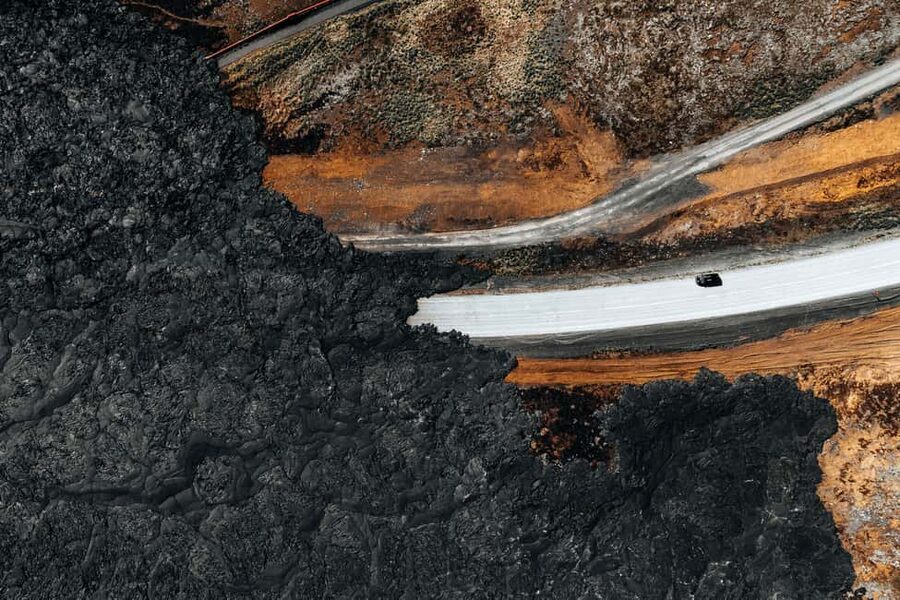
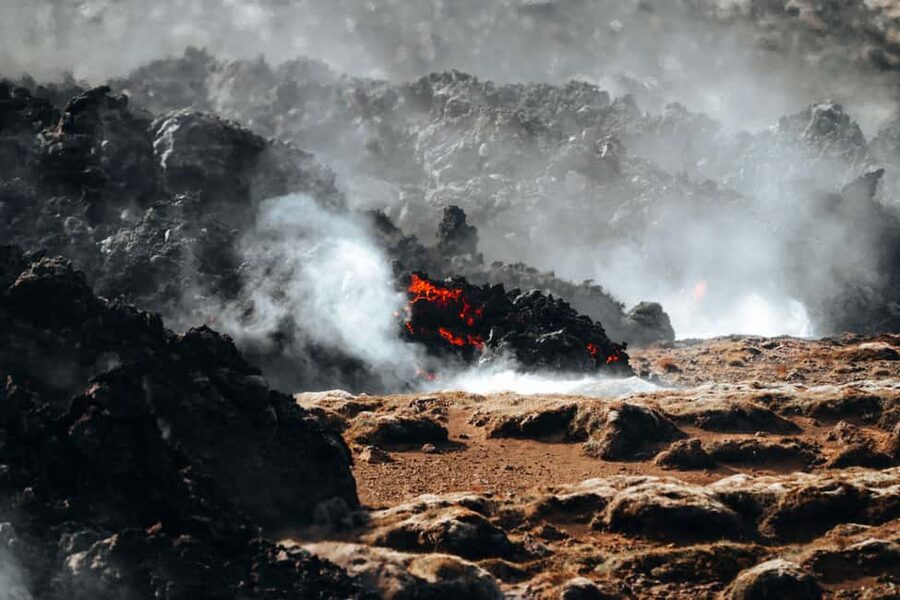
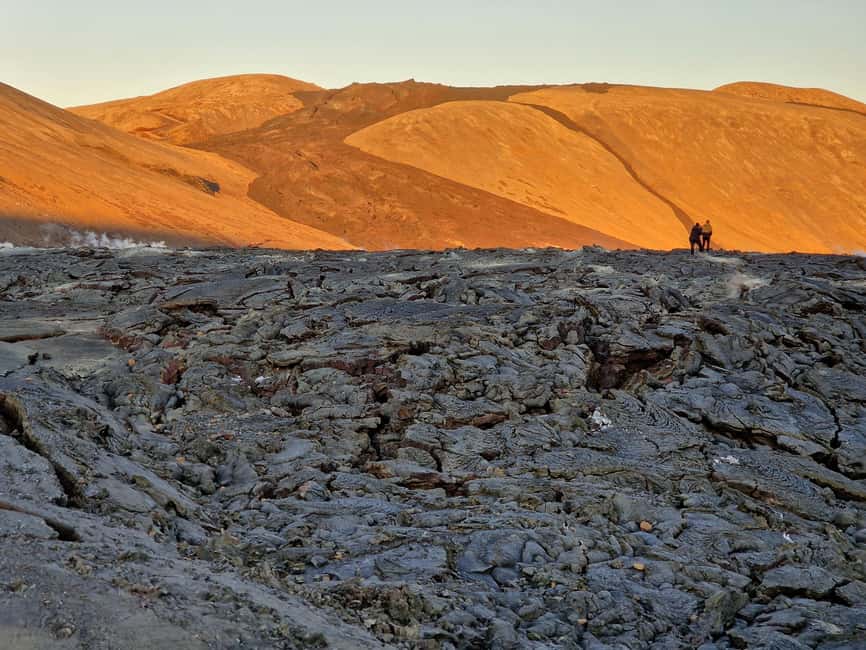
The day ends with a visit to the newly formed Sundhnúkagígar / Svartsengi lava field. This is a more hands-on geology stop. You walk through a recently erupted area where steam rises from cooling lava.
Even if you have seen geothermal steam before, this feels different because you are closer to the raw process: heat, cooling rock, steam, and the shapes created by flow. It is the kind of place where the ground feels alive in a slow, physical way.
Time here includes walking and sightseeing, and your guide will set the boundaries. Follow them closely and stay on any marked paths. If the steam is strong, it can also mean the area is actively venting, so give yourself room and keep moving thoughtfully.
When you finish, you head back to Reykjavik for an early evening arrival, which leaves you free to relax instead of dragging yourself into a second day of driving.
Price and value: what 107 dollars buys in Iceland time
At about $107 per person for a 6-hour half-day, you are paying for more than sightseeing. You are paying for (1) expert guiding, (2) transportation with pickup and drop-off, and (3) access to several distant sites on one schedule.
If you tried to do this solo, you would face a bigger time puzzle: multiple sites on a rugged peninsula, geothermal stops that reward quick, guided orientation, and a longer route than you might expect from Reykjavik. The tour compresses all of that into a single organized day, which is exactly what makes it feel like a good deal.
You also get a practical learning benefit. The explanations about geothermal features, mineral colors, and volcanic timelines make the scenery more than photos. It turns the day into a story you can remember.
Who should book this tour, and who should skip it
This is a strong fit if you want a “big geology day” without spending your whole vacation driving. You will enjoy it if you like short hikes, you can handle uneven ground, and you want to see both geothermal areas and eruption impact.
It is not suitable for pregnant women, people with back problems, wheelchair users, or people with low level of fitness. If any of those apply, it is worth choosing a different type of tour with less walking.
Weather also matters here. The area around active volcano activity can change quickly. If local authorities request a change or cancel due to conditions, you will want to keep that in mind when you plan your days.
What to bring (and how to make the most of your photos)
Pack for cold plus geothermal moisture. Bring comfortable shoes, warm clothing, and a camera you are ready to use quickly. The tour recommends snacks and water, especially because you will be walking during the hike and spending time outdoors near steam and open terrain.
A few small habits make a big difference:
- Keep an extra layer easy to reach for the viewpoint hike.
- Don’t over-pack your hands, you will want to steady your stance on uneven ground.
- If the wind is up, plan for shorter photo bursts instead of waiting for perfect conditions.
Also note the rule: no smoking.
Should you book? My decision checklist
If you want an honest taste of Reykjanes Peninsula in one day, this tour is a yes for most people. The combination of Seltún geothermal area, a crater-lake stop, a viewpoint hike near Fagradalsfjall, and an eruption impact visit around Grindavík is a lot to fit into six hours, and the pacing usually works.
Book it if you:
- enjoy walking and short hikes
- want guided context for what you are seeing
- like the idea of seeing both geothermal energy and eruption aftermath
Skip it if you:
- need wheelchair-friendly access
- have back or mobility issues that make rough ground hard
- do not want any hiking at all
If you are on the fence, think about your tolerance for uneven terrain and changing weather. If you are comfortable with that, you will likely come away feeling like Reykjanes is not just scenery, it is an active story told by steam, minerals, and cooled lava.
FAQ
How long is the tour from Reykjavik to the Reykjanes Peninsula?
The tour duration is 6 hours.
What is included in the price?
The tour includes an expert guide, pickup and drop-off in Reykjavik, visits to Kleifarvatn Lake, Seltún geothermal area, Grænavatn, a hike to the Nátthagi viewpoint, a tour of Grindavík, and a visit to the Sundhnúkagígar / Svartsengi lava field.
Are meals and drinks included?
No. Meals and drinks are not included, so you may want to bring snacks and water for the hike.
What should I bring and wear?
Bring comfortable shoes, warm clothing, a camera, snacks, and water.
Is there any hiking or walking?
Yes. The day includes a hike to the Nátthagi viewpoint, and there is also walking during the lava field visit.
Is the tour wheelchair accessible?
No. It is listed as not suitable for wheelchair users.
Fresh on the forecast for Reykjavik
- Iceland Game of Thrones Tours
★ 5.0 · 7 reviews - Reykjavik: Golden Circle Tour & Laugarás Lagoon Entry
★ 4.7 · 7 reviews - Reykjavik Private 4-Hour Tour with Transfer
★ 5.0 · 7 reviews - Thórsmörk, Valley of Thór | Private Tour | PRO Photos Included
★ 5.0 · 7 reviews - Reykjavik: Private Golden Circle and South Coast Tour
★ 5.0 · 7 reviews - Reykjavik: Small-Group Northern Lights Tour with Pickup
★ 5.0 · 7 reviews - Reykjavik: Golden Circle Super Jeep Tour with Snowmobiling
★ 4.9 · 7 reviews
Tours, compared.
Golden Circle Full-Day Tour with Kerid Crater
Read our review →
South Coast Waterfalls, Black Sand & Glacier Tour
Read our review →
Iceland South Coast Full Day Small-Group Tour from Reykjavik
Read our review →
Golden Circle, Kerid Crater, & Blue Lagoon Tour
Read our review →
Golden Circle Classic Day Tour from Reykjavik
Read our review →